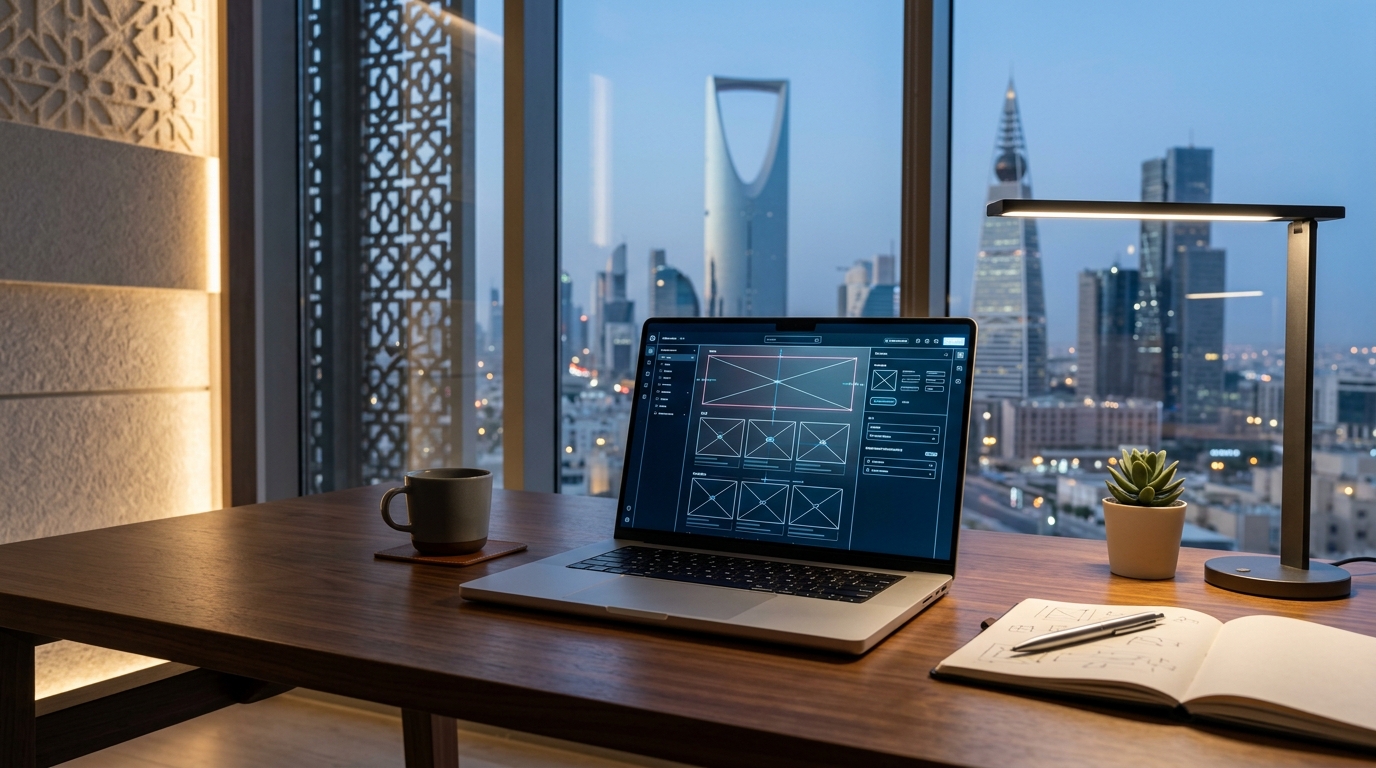
You built the product. You have the inventory. Now you need a store that actually sells.
For retail and hospitality business owners in Riyadh entering e-commerce for the first time — or replacing a store that never delivered — the gap between a website that exists and one that converts is significant. This article covers exactly what separates the two: fast load times, Arabic-language UX, local payment gateway integration, and checkout flows built to close.
Why Most Riyadh E-Commerce Stores Lose Customers Before Checkout
The problem is rarely the product. It is almost always the store.
Slow pages push visitors away before they see a single item. A checkout that does not support STC Pay or Mada creates friction at the exact moment a buyer is ready to pay. A site built on a generic international template — no Arabic RTL support, no local payment logic — will consistently underperform no matter how much you spend driving traffic to it.
Saudi buyers expect a specific experience. They browse on mobile, pay with local methods, and read in Arabic. If your store does not meet those expectations, they leave. It is that straightforward.
What a High-Converting E-Commerce Store in Riyadh Actually Needs
Fast Load Times on Mobile
Mobile drives the majority of e-commerce traffic in Saudi Arabia. A store that loads slowly on a 4G or 5G connection loses buyers before the page finishes rendering — and every additional second of delay compounds the drop-off.
Fast load times are not a design preference. They are a revenue variable. Clean code, compressed assets, and a properly configured hosting environment are the foundation. For any e-commerce build that aims to convert, this is non-negotiable.
Arabic-Language UX, Built Properly
Arabic is right-to-left. That is not just a text direction setting — it affects navigation placement, button alignment, product card layout, and how the eye moves through a page. A site built with genuine RTL support feels natural to Arabic-speaking customers. A site that applies a quick RTL toggle to a left-to-right template feels off, even if the visitor cannot explain why.
Your store should be bilingual from the start — Arabic and English — with both versions designed intentionally, not translated mechanically.
STC Pay, Mada, and Tabby Integration
Payment gateway integration is where many e-commerce builds in Riyadh fall short. International platforms default to Stripe or PayPal. Saudi buyers default to STC Pay, Mada, and increasingly Tabby for buy-now-pay-later. If your checkout does not offer these options, you are asking customers to use a payment method they do not prefer or simply do not have. Most will abandon the cart.
Integrating these gateways adds to the cost of a development project. Based on 2026 market data, Arabic localisation and local payment gateway integration typically adds 20 to 40 percent on top of base development costs. That investment pays back quickly when your checkout completion rate climbs because buyers can pay the way they want to.
A Checkout Flow Designed to Close
The checkout flow is the last 30 seconds of a sale. It should remove every possible reason to stop.
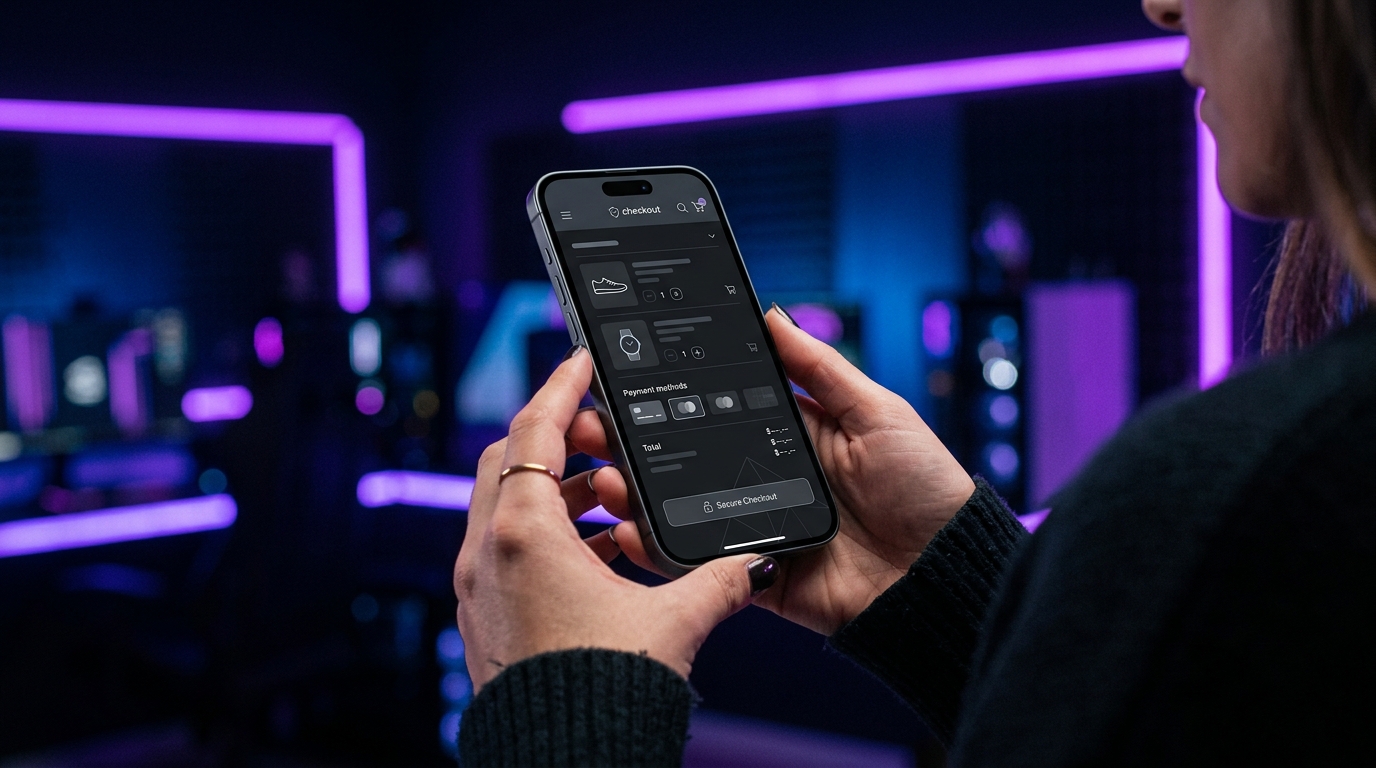
That means minimal steps, a clear order summary, trust signals at the point of payment, and no surprise fees appearing at the end. Guest checkout should be available. Confirmation should be immediate. On mobile, the entire flow should be completable with one thumb.
A checkout built for conversion is a design discipline, not an afterthought.
The Cost of Getting It Wrong
A slow, poorly localised, or technically weak e-commerce store does not just fail to grow — it actively costs you money. You pay for traffic through ads, social content, and time. If the store cannot convert that traffic, every riyal spent on marketing produces less return.
The 2026 market range for SME e-commerce development in Riyadh runs from SAR 8,000 to SAR 40,000 depending on complexity, per publicly available pricing data. The right investment is not the cheapest build. It is the build that performs.
Your website is your best salesperson. It works every hour of every day. Build it to close.
What to Look for in an E-Commerce Development Partner in Riyadh
Local Market Knowledge
An agency that understands the Saudi market builds differently from one that does not. Local payment gateways, Arabic UX, mobile-first design for Saudi browsing habits, and awareness of seasonal buying patterns like Ramadan campaigns are not extras — they are baseline requirements.
International agencies and freelancers without this context produce stores that look fine in a mockup and underperform in the market.
Speed of Delivery
Timing matters in e-commerce. If you are launching before Ramadan, ahead of a seasonal campaign, or alongside a new product line, a 4 to 6 week development timeline can cost you the window entirely.
No other custom web studio in Riyadh currently advertises a sub-5-business-day delivery guarantee. At Neuralys Studio, the standard is brief to live site in 3 to 5 business days. Submit your project brief and budget, receive a custom proposal within 24 hours, and launch before the window closes.
Transparent Pricing with No Hidden Fees
Design and development is a one-time fee. Hosting and domain carry a recurring monthly cost. That is the model — no hidden fees, no surprise invoices after delivery.
You should know exactly what you are paying for before work begins. A quote request form, a 24-hour proposal, and a clear scope before any commitment is how that works in practice.
Add-Ons That Extend Your Store's Performance
AI Chatbot Integration
An AI chatbot on your store handles common questions, guides visitors to the right product, and captures leads outside business hours. For a retail or hospitality business running a lean team, that is a meaningful operational advantage. Neuralys Studio integrates AI chatbots as a bundled add-on — not a separate agency engagement.
Google Business Profile Setup
Local search visibility matters even for e-commerce businesses. A properly configured Google Business profile connects your store to buyers searching in Riyadh and ensures you appear in map results, review surfaces, and local discovery. This is included as a bundled add-on alongside development.
What the Build Process Looks Like
- Submit a project brief and budget through the quote request form at neuralysstudio.online.
- Receive a custom proposal within 24 hours.
- Development begins immediately after approval.
- Your store goes live within 3 to 5 business days.
No weeks of back-and-forth. No freelancers who disappear after delivery. No generic template dressed up as a custom build. You can review completed work in the portfolio before you commit.
Ready to Build a Store That Sells?
Whether you are entering e-commerce for the first time or replacing a store that has not delivered, the next step is simple. Submit your brief at neuralysstudio.online and receive a custom proposal within 24 hours. Your store can be live within the week.
Frequently Asked Questions
How long does it take to build an e-commerce website in Riyadh? At Neuralys Studio, every project goes from brief to live site in 3 to 5 business days. Most traditional agencies in Riyadh operate on 4 to 6 week timelines. If you have a launch window or a seasonal campaign deadline, that difference matters.
Which payment gateways should a Saudi e-commerce store support? At minimum, STC Pay and Mada. Adding Tabby for buy-now-pay-later gives customers a third option that is growing quickly in the Saudi market. All three are standard integrations in a properly built Saudi e-commerce store.
Does Arabic-language support add cost to an e-commerce build? Yes. Genuine Arabic RTL design and localisation, combined with local payment gateway integration, typically adds 20 to 40 percent to base development costs based on 2026 market data. It is an investment that directly affects conversion rates for Saudi buyers.
What is the typical cost of an e-commerce website in Riyadh? The 2026 market range for SME e-commerce development in Riyadh runs from SAR 8,000 to SAR 40,000 depending on scope and complexity. Neuralys Studio does not publish fixed prices. Submit a brief and budget, and you will receive a custom proposal within 24 hours.
Can I manage my own product listings and content after the site is live? Yes. Neuralys Studio implements CMS solutions so you can update products, prices, and content without needing a developer for every change.
What is the difference between a template store and a custom-built e-commerce site? A template store applies a pre-built design to your content. A custom build is designed and developed specifically for your business, your customers, and your market. Custom builds load faster, support local payment gateways properly, and are built with Arabic UX from the ground up rather than retrofitted.
Does Neuralys Studio serve businesses outside Riyadh? Yes. The studio is based in Riyadh but serves clients across Saudi Arabia and the broader regional market, including Jeddah and other Saudi cities.