
You have a project in mind. Maybe it's a service business that needs an online presence, or a platform where customers can book, pay, and manage their accounts. At some point, the question comes up: do I need a website or a web app?
The two terms get used interchangeably, but they describe fundamentally different things. Choosing the wrong one wastes budget, delays your launch, and often means rebuilding from scratch six months later. Here's a clear framework to help you decide.
What Is a Website, Actually?
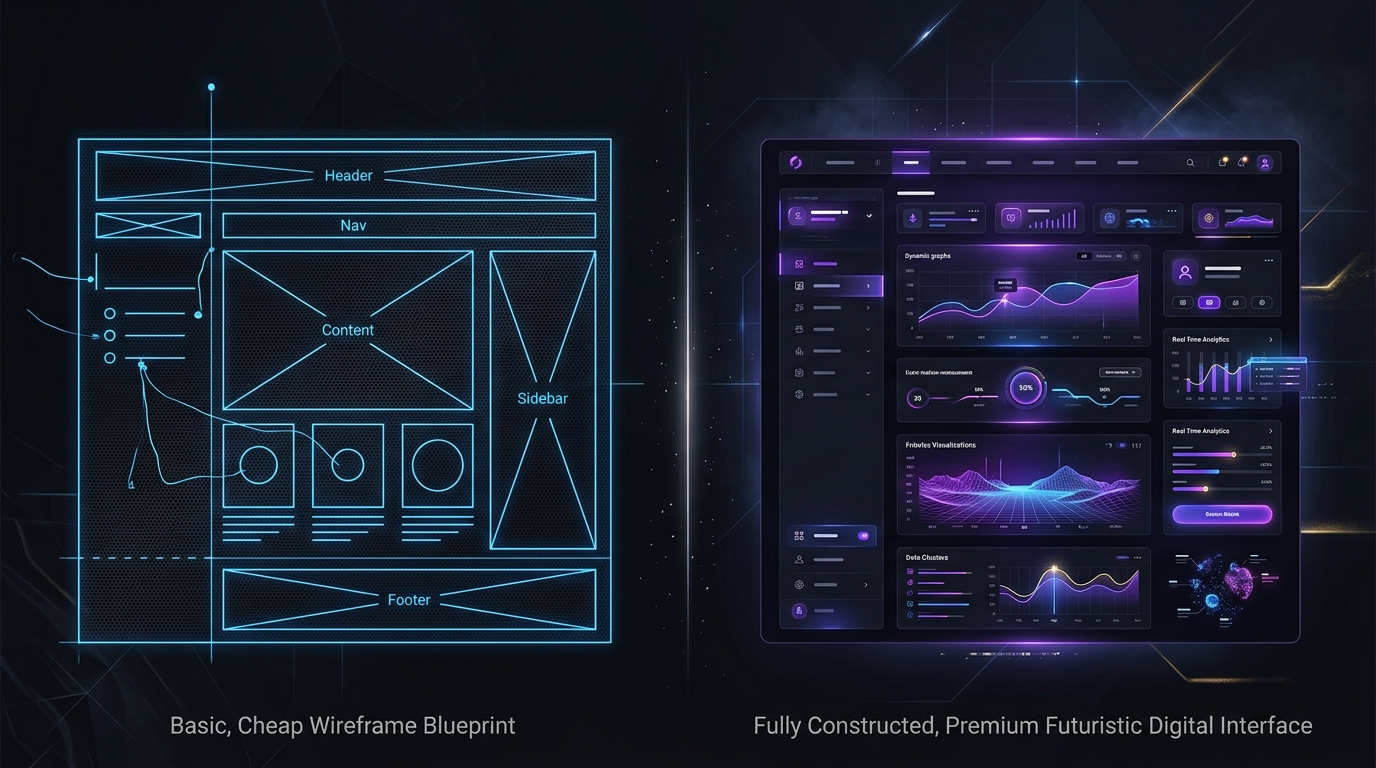
A website is a collection of pages that present information to visitors. It can include text, images, video, a contact form, and product listings. Visitors read it, browse it, and occasionally submit a form. The content is largely static or updated by you through a CMS.
Think of a restaurant's menu page, a law firm's service overview, or a landing page designed to capture leads. The visitor consumes information. The site doesn't change based on who's viewing it or what they do.
Websites are the right choice when your goal is to establish credibility, rank on Google, generate enquiries, or sell products through a straightforward checkout. They're faster and less expensive to build, and easier to maintain without a technical background.
What Is a Web App?
A web app is software that runs in a browser. It responds to what the visitor does. The experience changes based on input, user state, or data.
A booking system where clients log in, select a time slot, and receive a confirmation is a web app. A dashboard where a business owner monitors orders, inventory, and revenue in real time is a web app. A platform where customers create accounts, track deliveries, and manage subscriptions is a web app.
The defining characteristic is interactivity tied to logic. The app processes data, stores it, and returns a different result depending on what the visitor does.
Web apps take longer to build, require more planning, and carry higher ongoing maintenance. But for the right project, they're the only option that actually works.
The Decision Framework: Five Questions to Ask
Before you brief any agency, answer these five questions honestly.
1. Does the visitor need to log in?
If yes, you almost certainly need a web app. Authentication, user accounts, and personalized content require back-end logic that a standard website simply doesn't have.
2. Does the site need to store or retrieve data per visitor?
A contact form that sends you an email is a website feature. A system that stores each client's booking history, sends reminders, and lets them reschedule is a web app feature.
3. Does the experience change based on what the visitor does?
If every visitor sees the same pages in roughly the same order, you have a website. If the interface updates in real time based on input, selections, or a logged-in state, you have a web app.
4. Are you selling information or automating a process?
Selling a product through a checkout is a website function. Automating a workflow — assigning bookings to staff, triggering invoices, managing a queue — is a web app function.
5. What is your launch timeline and budget?
This is where many founders get into trouble. A web app requires significantly more scoping, development time, and testing than a website. If you need to be live within a week to hit a launch date or present to investors, a website is almost always the practical answer for phase one.
When a Website Is the Right Starting Point
Most early-stage Saudi SMBs need a website, not a web app. The goal at launch is usually to establish credibility, show up in local search results, and start converting visitors into paying customers or enquiries.
A well-built website with fast load times, a clear offer, and a working contact or booking form handles the majority of what a new business needs in its first year. You can add complexity later once you understand how your customers actually behave.
If you're a founder in Riyadh preparing to launch, a custom website built for the Saudi market is the fastest path to a credible online presence. Whether you eventually need a web app is a question worth revisiting at month six — not day one.
When You Actually Need a Web App
Some projects genuinely require a web app from the start. The clearest signals:
- Your business model depends on clients managing their own accounts — bookings, subscriptions, order history
- Staff need to log in and manage tasks, inventory, or schedules through the same interface
- Your service involves real-time data, such as live availability, dynamic pricing, or queue management
- You're building a platform where multiple parties interact, like a marketplace or service directory
If any of these describe your project, building a website and calling it done will frustrate your customers and create manual workarounds for your team. Invest in the right tool from the start.
The Hybrid Reality: Websites With App Features
The line between website and web app has blurred. Many modern websites include features that once required a full application. A CMS-powered website can include a booking widget, a payment gateway, a client portal, and an AI chatbot without being a full web app.
This middle ground is where most SMB projects land. You get the speed and cost efficiency of a website with enough functionality to automate the parts of your business that matter most. AI chatbot integration is a good example — it adds interactive, data-driven functionality to a standard website without requiring a full application build.
At Neuralys Studio, booking systems and AI chatbot integration are part of the standard service menu, not separate product lines. You can start with a website and layer in these features within the same engagement.
What This Means for Your Budget and Timeline
A website can be scoped, designed, and delivered in days. A web app cannot. The planning phase alone for a web app typically takes as long as the full delivery of a standard website.
If your budget is in the SAR 2,000 to 8,000 range and you need to be live within a week, you're in website territory. A web app at that budget and timeline isn't realistic — and any agency telling you otherwise is either underscoping the work or cutting corners that will cost you later.
The smarter approach is to launch a strong website, validate your offer with real customers, and scope the application features you actually need based on what you learn. Building a web app before you have paying customers is an expensive way to test an assumption.
How to Submit Your Brief Without a Discovery Call
One of the biggest time costs in any project is everything that happens before work actually starts. Most agencies require a discovery call, a scoping session, and a proposal round before you know what you're getting or what it costs.
At Neuralys Studio, you submit your brief and budget through the quote form and receive a custom proposal within 24 hours. No discovery call. No waiting on a sales team. The studio delivers finished projects within 3 to 5 business days from sign-off.
If you're still figuring out whether your project needs a website or a web app, submit the brief anyway. The proposal will tell you what makes sense for your specific goals and budget.
FAQs
What is the main difference between a web app and a website? A website presents information to visitors who read and browse it. A web app processes input and returns a different result based on what the visitor does. The key distinction is whether the experience changes based on user actions or data.
Can a website include booking or payment features? Yes. A website can include booking widgets, payment gateways, and contact forms without being a full web app. These features handle specific interactions without requiring a full application architecture.
Which is faster and cheaper to build: a website or a web app? A website is significantly faster and less expensive. A web app requires more planning, development time, and testing. For most early-stage businesses, a website is the practical starting point.
Do I need a web app if I want clients to log in and manage their accounts? Generally yes. Account management, personalized dashboards, and stored client data require back-end logic that goes beyond a standard website. This is one of the clearest signals that a web app is the right choice.
Can I start with a website and add web app features later? Yes, and for most businesses this is the smarter approach. Launch a website to establish your presence and validate your offer, then scope the application features you actually need based on real customer behavior.
How long does it take to build a web app compared to a website? A custom website can be delivered in 3 to 5 business days. A web app requires a longer scoping and development cycle. Even with a focused team, you shouldn't expect a web app to be ready in under a few weeks.
How do I know which one my project needs? Ask yourself whether visitors need to log in, whether the experience changes based on what they do, and whether you're automating a process or presenting information. If the answers point to a website, start there. If they point to a web app, scope it properly before committing budget.
Not sure which one fits your project? Submit your brief at neuralysstudio.online and receive a clear proposal within 24 hours — no discovery call required.